
Professor Sally Shortall
Duke of Northumberland Chair of Rural Economy Professor.
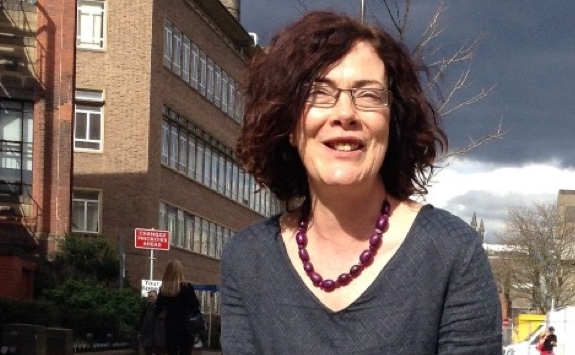
School advice - be a social worker
She explained: 鈥淲hen I finished school in Ireland, we were all sent for an assessment. It was to see what occupations suited us.
"I was told I would make a good social worker. I believed them so I went to Cork University to do a degree in Social Science, which was the first step.
"We had to study sociology, psychology, philosophy and economics in the first year. I began to think I would be more interested in sociology, so I managed to continue taking that as one of my options.鈥�
Sally started as a youth and community worker for Kerry Diocesan Youth Service. She worked in two deprived areas.
鈥淚 did love the work,鈥� she said, 鈥渁nd I felt fortunate to get the job during a recession.鈥�
She looks back on the work with deprived families as a valuable and enjoyable experience.
She fought for better resources for their young children. It is an experience that has benefited her academic research.
My mother was not so impressed I was giving up a steady job with a pension to do a Masters in Sociology. - Professor Sally Shortall
Steady job to sociology research
But there were frustrations too. When Cork University offered a funded Sociology Research MSc place for rural research, she jumped at the chance.
鈥淢y mother was not so impressed I was giving up a steady job with a pension to do a Masters in Sociology,鈥� Sally admitted.
鈥淏ut it turned out to be a good move. I had decided to base my research around Stephen Luke鈥檚 Theory of Power, in relation to women on family farms.
"Why were they so committed to the land when they had no possibility of inheriting the farm? What I had not realised was that this theory was big news in sociology at the time.
"But it was seen as very theoretical, without having been tested in a research context. So when I came to be examined for my thesis, the examiner thought it was above a Masters. They recommended that I should resubmit for a PhD.鈥�
My paper was very critical of the work of a very well-known sociologist, Damian Hannan. What I didn鈥檛 realise until five minutes before I gave the paper was that he was in the audience. - Professor Sally Shortall
With criticism comes a job
In the meantime, Sally got a job at the Economic and Social Research Institute (ESRI) in Dublin. This was after she gave a conference paper based on her work on the role of women on farms.
鈥淢y paper was very critical of the work of a very well-known sociologist, Damian Hannan. What I didn鈥檛 realise until five minutes before I gave the paper was that he was in the audience.
"You can imagine what that did for my nerves! But it turned out ok because he ended up offering me a post as his research assistant.
"This meant I got training in quantitative methods. Before that I had very much been a qualitative researcher, without quantitative experience.
"That training made me much more confident in handling statistics. This has been of benefit in my work ever since.
"At the ESRI I also learnt the value of understanding economics. I also learnt the importance of thoroughness and precision underpinning social science research.鈥�
Canada comes calling
She was able to build on this when the ESRI funded her to undertake further training and experience. This was in Advanced Quantitative Methods and Theory at McGill University in Canada.
She said: 鈥淢cGill wanted a large quantitative survey on blue collar labour recruited through churches.
"It was interesting. I built a network of rural social partners and academic contacts there and at Concordia University.
"That was a valuable lesson I learnt 鈥� the importance of networks you can draw on throughout your academic career.
"Also, from McGill, I learnt that you have to publish or perish, and make sure you read the best academic journals. These are principles that have stood me in good stead ever since.鈥�
After that Sally had permanent job offers from several universities in the US and Canada.
Temporary post tackling policy
But when a temporary post came up at the National Economic and Social Council (NESC) in Dublin she went for it. That's because it interested her, over and above worrying about job security.
鈥淣ESC advises the Irish Government on policy,鈥� she explained. 鈥淪o they both commission and carry out research. That often involves getting agreement from a range of social partners.
"I thought I would never again have such an opportunity to find out how policymaking works. It was important to see how research works in that process.鈥�
Then a job came up at Queen鈥檚 University Belfast which she says "could have been written for me".
She said: "So for several years I was really happy there. I had my family and secondment opportunities. These included the Gibson Institute for Land, Food and Environment, and Department of Agriculture and Rural Development (now DAERA).
鈥淚 feel very lucky that I鈥檝e had opportunities during in my career to work as a practitioner. This was with youth and community services, on policy at the ESRI and NESC, and also in academia. I gained an understanding of how they relate to one another.鈥�
CRE is very well regarded in rural studies. It is an exciting time to be here. It has inspired me to go back to some of my early interests in the family farm, social exclusion, how policy is shaped, and the construction of knowledge. - Professor Sally Shortall
缅北禁地 post and Scottish Task Force
In 2016 Sally moved from Queen鈥檚 University - where she was by then Department Chair/Head of School - to her present post. She is at 缅北禁地, based in the Centre for Rural Economy.
鈥淐RE is very well regarded in rural studies,鈥� she said. 鈥淚t is an exciting time to be here. It has inspired me to go back to some of my early interests in the family farm, social exclusion, how policy is shaped, and the construction of knowledge.鈥�
Sally is also kept busy with some very practical work on the recently created Scottish Task Force on Women in Farming.
鈥淪eeing the Task Force established has been a great achievement for me and colleagues from the James Hutton Institute.
"Scottish First Minister Nicola Sturgeon set it up in direct response to our research report. I was invited to be a member. That is a great example of social science having impact.鈥�
A grand job title
And her rather grand job title? It still makes her smile. She's been delighted to meet the Duke, whose father endowed the chair, and who has himself supported the more recent funding appeal.
鈥淚t was a privilege to be shown around the Northumberland estate,鈥� she said, 鈥渁nd to talk with the Duke about potential areas of common interest that CRE could get involved in researching, such as rural tenancies. It would be a great opportunity if we could work with him on these.鈥�