PGR Led Engagement
The Doctoral College provides financial support for PGRs to take part in, design, and lead engagement activities that enhance research culture and enrich the wider university community. Funding can support participation in existing activities and national competitions, as well as the development and delivery of PGR-led initiatives such as conferences, public engagement events and creative outputs. These opportunities are intended as value-added activities that complement - but remain distinct from - core research. They often focus on providing spaces to develop skills, share research creatively, and engage with wider audiences in innovative and meaningful ways.
Applying for funding
Examples of PGR-led activities could include PGR-led Conferences, Symposia, Workshops, Exhibitions or Community Engagement. The activities must be able to be delivered at scale, have demonstrable impact or benefits to our PGR Community and be supported by your Academic Supervisor. Please note we do not support applications for individual funding support.
Applications can be made from the 3rd August 2026 - 12th April 2027.
Applications must demonstrate how the activity will:
- Support the sharing of research and engagement with a wider audience
- Provide an opportunity for PGRs to collaborate across disciplines and institutes
They could also focus on:
- Translating research into creative or accessible formats
- Enhance public engagement with our PGR community through community engagement activities and events
Below are examples of previously supported PGR-led initiatives and events:
Annual Events and Competitions
The Doctoral College supports PGR participation in a range of established annual, national and sector-wide opportunities designed to sharpen your communication, impact, and research engagement skills. They offer a chance to step outside of day-to-day research activity, build confidence, and raise your profile. Examples include:
3 Minute Thesis (3MT)
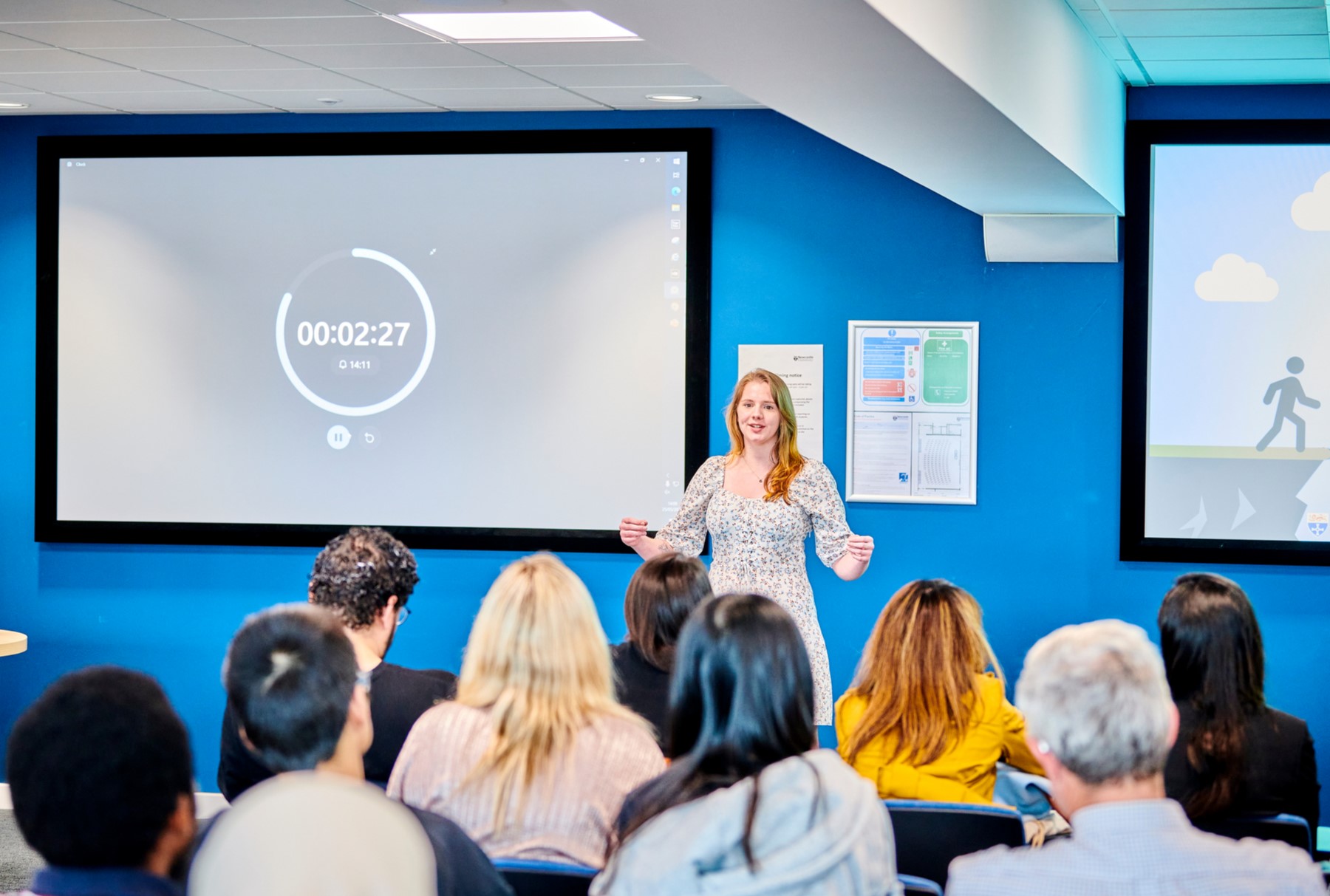
The Three Minute Thesis (3MT) competition challenges doctoral students to explain their research in just three minutes, using only a single slide, to a non-specialist audience. Originally developed by the University of Queensland, Australia, 3MT has since been adopted by universities worldwide. The competition provides training and support, followed by the opportunity to compete in a University heat. The winner then progresses to the national competition.
For further information, please contact: laura.leonardo@newcastle.ac.uk
YES Enterprise Programme
Policy Academy
The Policy Academy is 缅北禁地’s hub for strengthening policy engagement across our community. We support colleagues at every career stage to understand, navigate and influence the policy landscape from local government to national and international decision-making.
For more information about the Policy Academy, including the QR Policy Academy Support Fund, which supports activity between researchers and policymakers, and Policy Academy Training Opportunities, please see the Policy Academy Leaflet or contact nu.policyacademy@newcastle.ac.uk.
Leading our own opportunities is a great way for PGR students to develop and shape our individual career paths
PGR-Led Initiatives & Events
The Doctoral College also supports PGRs in developing and delivering their own engagement initiatives. These may include university-wide events, conferences, exhibitions, or creative outputs linked to their research.
These activities provide opportunities for PGRs to:
- Share their research with wider audiences
- Develop public engagement and leadership skills
- Collaborate across disciplines and institutions
- Translate research into creative or accessible formats
Below are examples of previously supported PGR-led initiatives and events:

Picture This: Someone Like Me Exhibition
Led by PhD researchers Phoebe Lewis and Ainsley Hatt, the project invited postgraduate researchers to move beyond traditional academic formats and communicate their research with wider public audiences. It included a series of workshops led by Peter Moore Fuller (infohackit), where participants explored design and visual communication using Affinity by Canva to transform their complex PhD research into illustrated artworks. The resulting artworks are on display at the Great North Museum: Hancock from the 13th March 2026 to the 17th January 2027.
The exhibition also celebrates the diverse and often unexpected journeys into academia, inviting visitors to imagine that "someone like them" could be part of it too. It offers a reminder that research doesn't just belong in journals – it can be shared, seen and understood in ways that connect with everyone. Phoebe Lewis said:
"One of the highlights of the project has been seeing researchers from completely different disciplines, who may not normally cross paths, come together and learn how to communicate their work visually through their own artistic styles."
For more images of the artworks displayed, visit:

Navigating Gender and Genre Conference
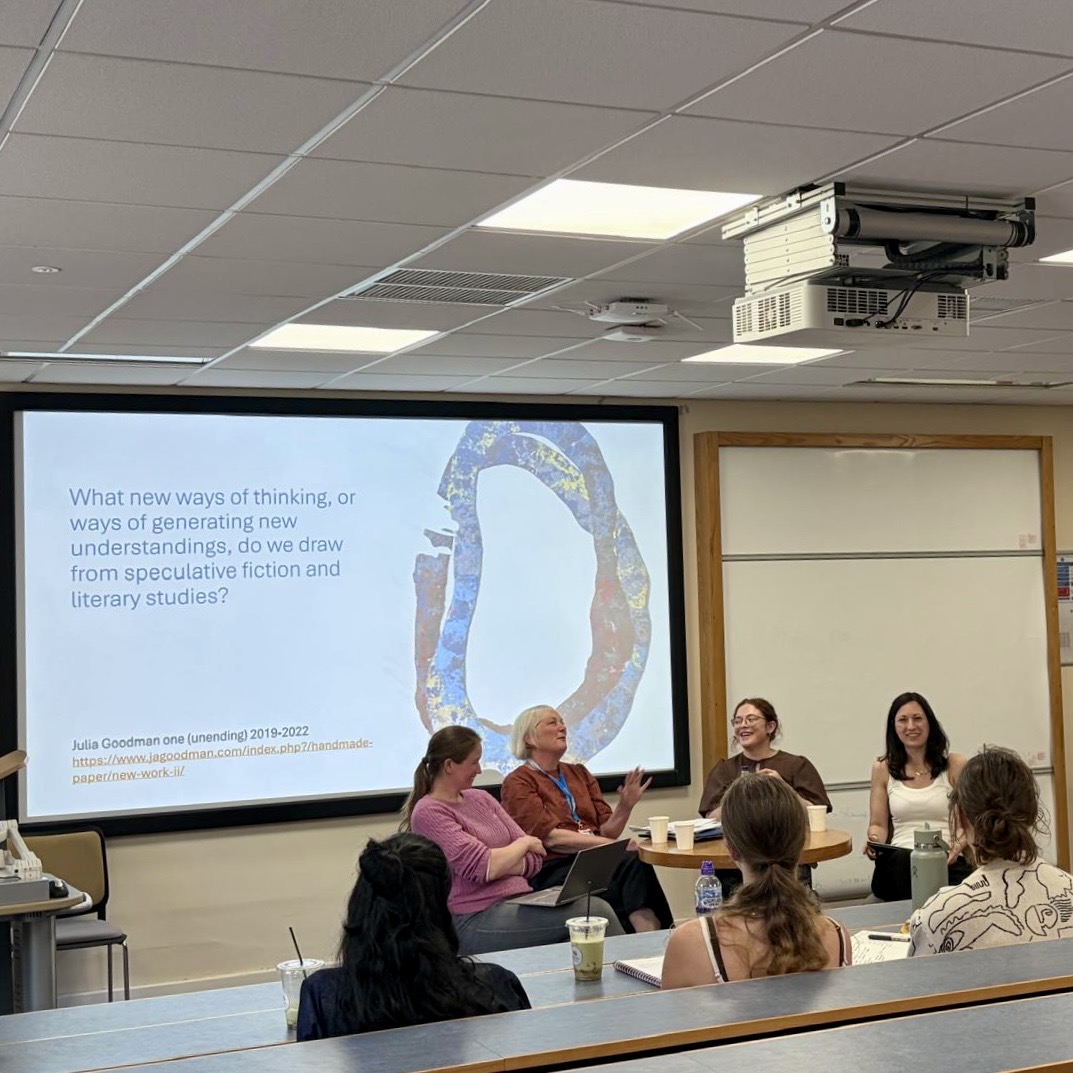
Aparna Sivasankar and Abi Hockaday organised a conference titled “Women in SFF: Navigating Gender and Genre”, bringing together around 50 scholars, creative writers, publishers, reviewers, critics, legal scholars, sociologists and members of the public to explore questions of gender and genre in popular fiction. The diverse mix of speakers and attendees generated engagement well beyond the university community.
“Organising and running the conference was a great experience for both of us,” they said, adding that the event exceeded their expectations and has had a wide-ranging and lasting impact. Abi has since been invited to Glasgow — home of the conference’s keynote speaker, Anna MacFarlane — to conduct further archival research, while Aparna has gained the opportunity to work with authors and publishers during the Books on Tyne festival in 缅北禁地. Most significantly, a selection of papers from the conference will be published in a special issue of Foundation: The International Review of Science Fiction, supported by the Science Fiction Foundation, one of the event’s sponsors. Reflecting on the experience, the organisers said:
“You have nothing to lose, and everything to gain, from running events like this.”
Curating a Digital Exhibition with the University of Genoa
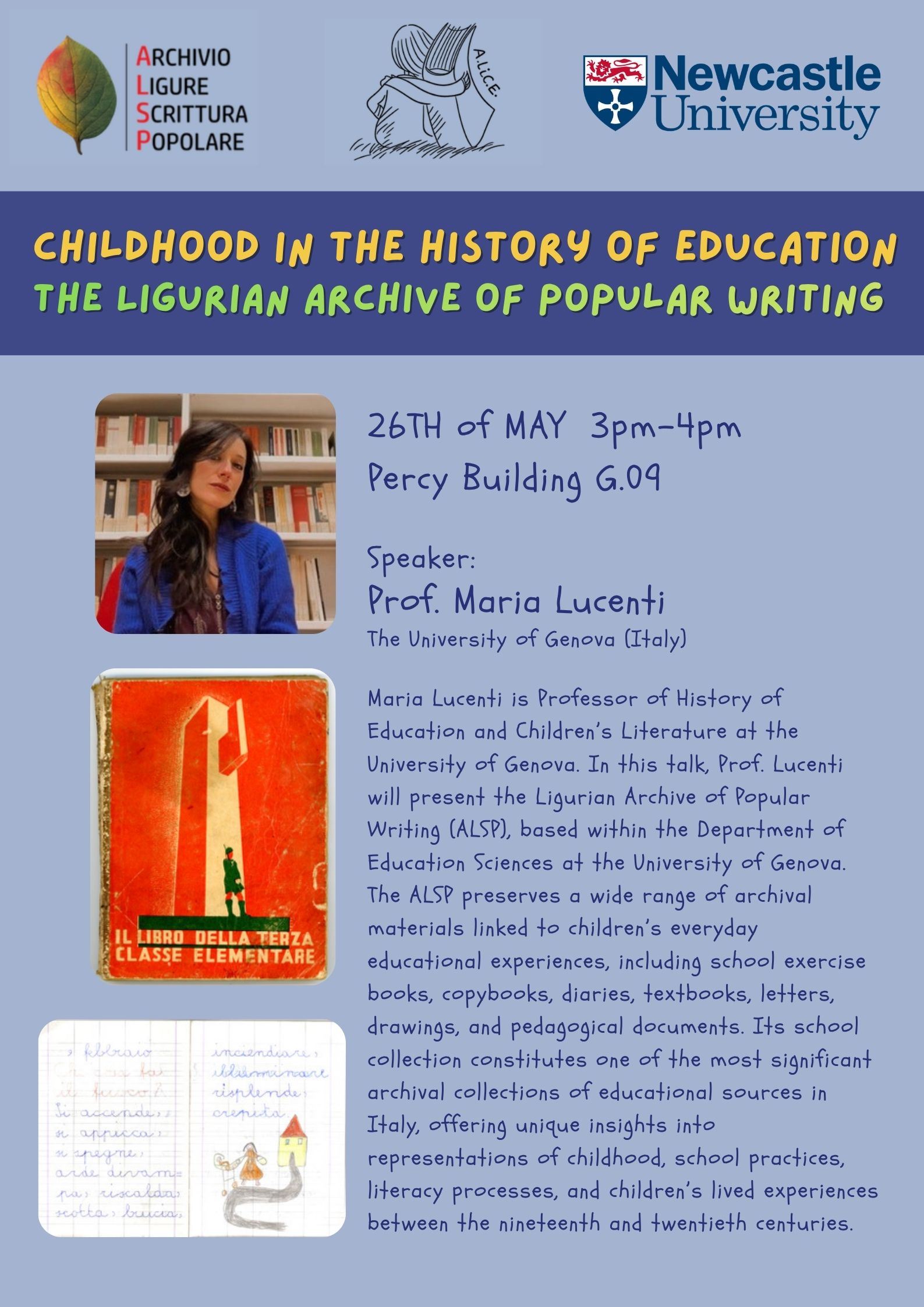
Xinyue Hu received PGR Engagement Funding to lead the development of an online exhibition in collaboration with Professor Maria Lucenti at the University of Genoa, Italy. Inspired by the university’s children's archives during a research visit, Xinyue explored ways to make these unique collections accessible to a wider audience through digital curation. Reflecting on the project, she said: “This exhibition represents my attempt to explore new ways of presenting knowledge and supporting student learning.”
The project has had a significant impact on Xinyue’s development, providing experience with rich primary-source archival materials, building her digital curation skills and it has also influenced her research approach: “It inspired me to consider visual narratives and archival methodologies in my work, broadening my methodological expertise and opening up new perspectives for my future research.”
Reflecting on the value of the opportunity, Xinyue highlighted the importance of PGR-led initiatives in developing the leadership, project management and public engagement skills needed for future research careers:
“These are opportunities that are difficult to obtain through activities within my School or Faculty, where I typically participate as a student rather than taking on a leadership role in public engagement. The opportunity to lead and shape activities independently is precisely one of the key capacities that PGR students are expected to develop.”