Heritage, Museums and Galleries MLitt
- Study mode and duration
- Course code
- 7822F,7822P
- Fees (per year)
- Typical entry requirements
-
View full entry requirements - Course delivery
- On Campus
Course information for entry year:
Overview
The Heritage, Museums and Galleries MLitt is a research-based programme with some taught elements. The taught research methods part of the programme provides structured learning. This is ideal if you're unfamiliar with academic research or have been away from academia for a long time.
The flexible nature of the assignments makes this programme particularly suitable for sector professionals. It will suit those interested in advancing their career and knowledge through research. The assignments offer the opportunity for you to explore a variety of smaller topics or carry out in-depth research on a single topic. This research master's in Heritage, Museum and Galleries will also suit those who want to progress to doctoral study.
The programme is in Media, Culture, Heritage (MCH), within the School of Arts and Cultures. This is a leading academic centre for research and teaching in museum, gallery, and heritage studies.
MCH has a thriving, high-profile interdisciplinary research community of:
- postgraduate research students
- experienced academic researchers who are key figures in their fields
Our research students pursue a variety of topics related to museum, gallery and heritage studies. Our academic supervisors have significant experience in interdisciplinary research and professional practice. Our key research themes are:
- factors that determine how cultural policy is constructed: institutionally, locally, regionally, nationally and internationally
- how management strategies affect heritage resources
- the impact of large-scale constitutional change upon cultural policy
- intended and unintended consequences of implementing international
- conventions, charters and instruments
- contribution of research to cultural policy construction
- the intersection of political movements and agendas with heritage
- definitions and attributed values of heritage
- construction and representation of identities, places and communities through heritage
- how heritage is used by and for communities
- relationships between local, regional, national and international notions of place and identities, communities and heritages
- principles of community museology and ecomuseology practice in different contexts
- relationships between heritage tourism and identities, communities and places
- identities produced through the consumption of heritage
- relationship between identity construction and wellbeing
- how media works in heritage organisations and how organisations work as media
- factors shaping the production, morphology and consumption of media and media representations in heritage organisations
- representations made possible through institutional technologies specific to heritage organisations and how we analyse them to understand culture, society and knowledge
- study and design of digital heritage applications and digital cultural engagement
We have an emphasis on empirical research and its grounding on professional practice in the UK and abroad. As a result, our research alumni have been successful in securing worldwide careers in:
- academia
- other governmental organisations
- the cultural and creative industry sectors
Find out more about:
Important information
We've highlighted important information about your course. Please take note of any deadlines.
Please rest assured we make all reasonable efforts to provide you with the programmes, services and facilities described. However, it may be necessary to make changes due to significant disruption, for example in response to Covid-19.
View our Academic experience page, which gives information about your 缅北禁地 study experience for the academic year 2025-26.
See our terms and conditions and student complaints information, which gives details of circumstances that may lead to changes to programmes, modules or University services.
Quality and ranking
Professional accreditations are reviewed regularly by professional bodies to ensure they meet the latest industry practices and regulatory standards. This keeps your degree rigorous, relevant, and highly valued by employers, providing a clear pathway into your chosen career.
If you are studying an accredited degree and considering a career in Europe after graduation, it is important to stay informed about international standards. The best resource for current information is the .
This official resource provides essential details on:
- whether your profession is regulated in another country.
- the specific steps you need to take to practice abroad.
- which organisations you should contact to begin the process.
Our students


Aytach from Azerbaijan
Media and Public Relations MA
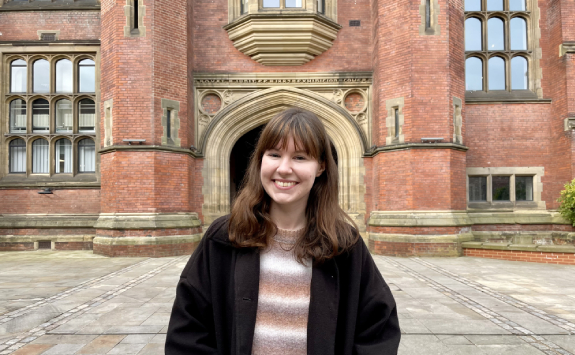
There is so much I enjoy about my course: the modules, practical tasks and assignments.

Christine from Germany
International Multimedia Journalism MA
Everyone I have encountered here so far has been nothing but kind and helpful. It’s my favourite thing about studying here.


Kanupriya from India
International Multimedia Journalism MA
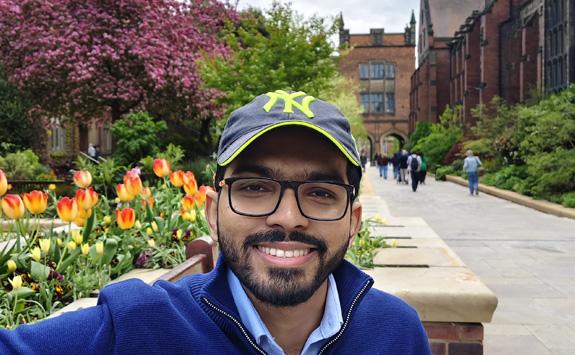
I really enjoyed being taught by my professors. They provided real-world examples and know what you need to become a successful journalist.
Jebby from India
Music Education MA
This course is for anyone who wants to think deeply about music teaching, learning, pedagogy, creativity, and the wider role of music in society.

Omkar from India
Media and Public Relations MA
缅北禁地 is special because it became a place where I felt included, valued and proud of what I contributed.


Alexandra from United Kingdom
Fine Art MA
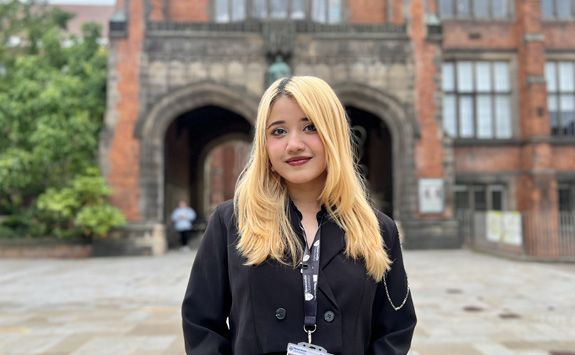
What I love most about 缅北禁地 is the sense of community and the incredible range of opportunities available.
Damia from India
Media and PR MA
What stands out most is how practical and well-structured the course is, the modules feel relevant to the real world.


Gloria from Ghana
Media and Public Relations MA
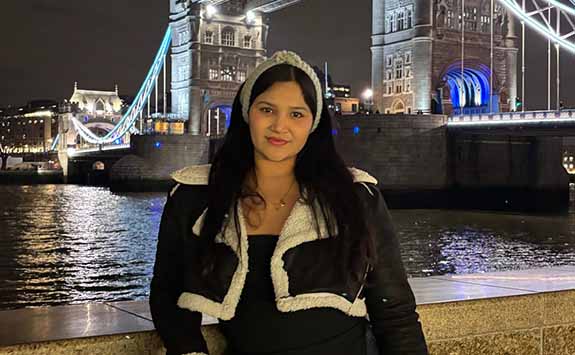
Engaging in media-related projects has helped me build confidence, teamwork, leadership, and networking skills.

Fabiana from Peru
Media and PR MA
This degree has helped me to think bigger, trust my own voice, and feel like my ideas can actually mean something.
What you'll learn
Taught modules aim to extend your knowledge and skills beyond undergraduate level and help to develop your research skills.
Modules
The module information on our course pages is intended to provide an example of what you will study.
Our teaching is informed by research. Course content changes periodically to reflect developments in the discipline, the requirements of external bodies and partners, and student feedback.
Full details of the modules on offer will be published through the Programme Regulations and Specifications ahead of each academic year. This usually happens in May.
Some courses have optional modules. Student demand for optional modules may affect availability.
| Compulsory Modules | Credits |
|---|---|
| MLitt Heritage, Museums and Galleries Research Assignment | 80 |
| MLitt Heritage, Museums and Galleries Dissertation | 80 |
Additional compulsory modules
The Making and Unmaking of Knowledge (10 credits)
Information Skills (10 credits)
How you'll learn
We deliver this programme at our 缅北禁地 city-centre campus. It combines two taught modules on research methods with two self-directed research-based modules. Research training classes usually take place once or twice a week in the first semester.
You're also expected to take part in the research activities in Media, Culture, Heritage and the School of Arts and Cultures.
You'll also have access to Canvas, the University's virtual learning environment.
Recent MLitt research topics in MCH include:
- World Heritage Sites and tourism
- the Frontiers of the Roman Empire as a World Heritage Site
Depending on your modules, you'll be assessed through a combination of:
- Dissertation
- Essay
- Problem-solving exercises
The main focuses of the programme are:
- small pieces of independent research
- a research-based dissertation carried out with the support of an academic supervisor
Our mission is to help you:
- stay healthy, positive and feeling well
- overcome any challenges you may face during your degree 鈥� academic or personal
- get the most out of your postgraduate research experience
- carry out admin and activities essential to progressing through your degree
- understand postgraduate research processes, standards and rules
We can offer you tailored wellbeing support, courses and activities.
You can also access a broad range of workshops covering:
- research and professional skills
- careers support
- wellbeing
- health and safety
- public engagement
- academic development
Entry requirements
The entrance requirements below apply to 2027 entry.
Qualifications from outside the UK
English Language requirements
Admissions policy
This policy applies to all undergraduate and postgraduate admissions at 缅北禁地. It is intended to provide information about our admissions policies and procedures to applicants and potential applicants, to their advisors and family members, and to staff of the University.
University Admissions Policy and related policies and procedures
Credit transfer and Recognition of Prior Learning
Recognition of Prior Learning (RPL) can allow you to convert existing relevant university-level knowledge, skills and experience into credits towards a qualification. Find out more about the RPL policy which may apply to this course
Your future
Our Careers Service
Our expert Careers Service is here to help you take the next steps in your professional life. We will support you while you’re studying with us and for up to three years after you graduate.
You will have access to expert one-to-one advice and guidance through our campus careers centre and online, along with digital resources, workshops, networking opportunities, and careers and recruitment events.
We’ve been awarded 5 QS Stars for Student Employability (2025). Many of our degrees are shaped by strong links with national and international businesses. We are committed to helping you access real-world experience opportunities and develop key skills through paid work placements and internships.
Facilities
As a research student in media, culture and heritage, you'll have access to a dedicated study space with:
- networked PCs
- printing
- photocopying facilities
You can also use the common room and kitchen to meet with fellow researchers and academics.
You'll have access to our top-quality facilities, plus the extensive cultural resources available on campus and in the city:
- our libraries and eResources
- the Centre for Heritage: a 缅北禁地 Centre for Research Excellence
- the Great North Museum: Hancock, located on campus. It houses the collections that previously made up the Hancock Museum, the Shefton Museum of Greek Art and Archaeology (an internationally-renowned collection of over 1,000 Greek and Etruscan artefacts), and the Museum of Antiquities
- the Hatton Gallery, located on campus, has been at the heart of cultural life in the North East since the early 20th century
- the Language Resource Centre is a specialist language facility providing free access to self-study materials in 50 languages
- with access to relevant databases and over 1,400 fully networked PCs
- non-campus facilities that are often used for student projects include and
In addition to our expertise in heritage studies, the city of 缅北禁地 and the wider region offer a wonderful resource. We've two World Heritage Sites, many heritage sites and over 80 regional museums and galleries. Much of the region's countryside is designated as National Park or Area of Outstanding Natural Beauty.
Fees, Funding and Scholarships
Tuition fees for 2027 entry (per year)
For 2026-27 entry, we've aligned our standard Home research fees with those set by . For 2027-28 entry, we will again be aligning our standard Home research fees with UKRI. They will announce their fees in Spring 2027.
As a general principle, you should expect the tuition fee to increase in each subsequent academic year of your course, subject to government regulations on fee increases and in line with inflation.
Depending on your residency history, if you’re a student from the EU, other EEA or a Swiss national, with settled or pre-settled status under the EU Settlement Scheme, you’ll normally pay the ‘Home’ tuition fee rate and may be eligible for Student Finance England support.
EU students without settled or pre-settled status will normally be charged fees at the ‘International’ rate and will not be eligible for Student Finance England support. You may be eligible for a scholarship worth 25% off the international fee. Search our funding database.
Scholarships
We support our EU and international students by providing a generous range of Vice-Chancellor's automatic and merit-based scholarships. See our searchable postgraduate funding page for more information.
Search for funding and scholarships
Find funding available for your course
What you're paying for
Tuition fees include the costs of:
- matriculation
- registration
- tuition (or supervision)
- library access
- examination
- re-examination
- graduation
Find out more about:
If you are an international student or a student from the EU, EEA or Switzerland and you need a visa to study in the UK, you may have to pay a deposit.
You can check this in the How to apply section.
If you're applying for funding, always check the funding application deadline. This deadline may be earlier than the application deadline for your course.
For some funding schemes, you need to have received an offer of a place on a course before you can apply for the funding.
How to apply
Using the application portal
The application portal has instructions to guide you through your application. It will tell you what documents you need and how to upload them.
You can choose to start your application, save your details and come back to complete it later.
If you鈥檙e ready, you can select Apply Online and you鈥檒l be taken directly to the application portal.
Alternatively you can find out more about applying on our applications and offers pages.
Open days and events
Find out about how you can visit 缅北禁地 in person and virtually
Overseas events
We regularly travel overseas to meet with students interested in studying at 缅北禁地.
Get in touch
Questions about this course?
If you have specific questions about this course you can contact:
Louise Driver
School of Arts and Cultures
Email: pgmch@ncl.ac.uk
Enquiries
If you've got a question about your application, send us an enquiry via the application portal you applied through.
If you haven't applied yet, or have a general enquiry, you can send your questions via our enquiry form.
Keep updated
We regularly send email updates and extra information about the University.
Receive regular updates by email
Chat to our students
Social media
Get involved with the School of Arts and Cultures social media