Finance BSc Honours
2027 entry information
- Study mode and duration
- Full time: 3-4 years
- UCAS code
- N300
- UCAS institution name and code
- NEWC / N21
- Tuition fees (Year 1)
-
FT Home: 拢10,050
FT International: £25,750 Scholarships available - Typical entry requirements
-
A-Level: AAB
IB: 34 points
View alternative offers - Course delivery
- On Campus
- Work placement opportunity Study abroad option
Course overview
Our varied and flexible Finance BSc programme will equip you with a wide range of career-enhancing skills and expose you to diverse experiences.
The curriculum is driven by the latest developments in financial theory and empirical findings. It is designed and taught by faculty who lead the way in finance research. You will also benefit from teaching by industry professionals and professionally qualified staff.
You will develop a working knowledge of a broad and diverse range of areas in finance, including:
- financial markets
- banking
- corporate finance
- financial analysis
Our offering constantly evolves to remain in step with the changing landscape of finance. This includes coverage of:
- FinTech
- green finance
- sustainability
- cryptocurrencies
As a result, you will develop in-depth knowledge of a wide variety of finance-related domains. You'll be able to approach real-world challenges creatively, working both individually and as part of a team.
We offer a range of optional modules, so you can tailor your academic journey to your own personal interests.
The Finance BSc programme is delivered by the Finance Subject Group. You can read more about our educational offering, research, real-world impact and academics on our subject group page.
Quality and ranking
Professional accreditation and recognition
Professional accreditation review and recognition of professional qualifications in Europe
Professional accreditations are reviewed regularly by professional bodies to ensure they meet the latest industry practices and regulatory standards. This keeps your degree rigorous, relevant, and highly valued by employers, providing a clear pathway into your chosen career.
If you are studying an accredited degree and considering a career in Europe after graduation, it is important to stay informed about international standards. The best resource for current information is the .
This official resource provides essential details on:
- whether your profession is regulated in another country.
- the specific steps you need to take to practice abroad.
- which organisations you should contact to begin the process.
Our students
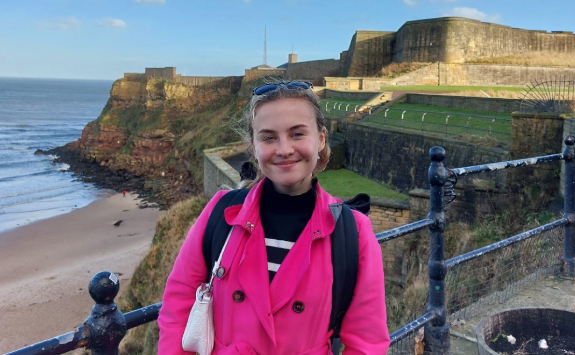

Hana from Czechia
International Business Management BSc
I’m not sure what I want to do in the future, being able to study lots of different modules is giving me the chance to explore all the possibilities.


Dilay from Türkiye
Accounting and Finance BSc
The social life at the university is diverse. I get to make friends and keep up with my healthy lifestyle while I study.


Mannik from India
Economics and Finance BSc
I have had opportunities to speak with associates and managing directors in investment banking, which has clarified my vision.


Nikita from Latvia
Business Management BA
My fondest memory of 缅北禁地 is the collaborative spirit that existed throughout the course.
What you'll learn
Modules
The information below is intended to provide an example of what you will study.
Most degrees are divided into stages. Each stage lasts for one academic year, and you'll complete modules totalling 120 credits by the end of each stage.
Full details of the modules on offer will be published through the Programme Regulations and Specifications ahead of each academic year. This usually happens in May.
Our teaching is informed by research. Course content may change periodically to reflect developments in the discipline, the requirements of external bodies and partners, and student feedback.
The first year gives you ample opportunities to develop a broad perspective on financial issues and the wider context. As well as learning about finance and accounting, you will:
- explore the economic and legal context in which financial markets and institutions operate
- gain insights into managing business enterprises
- study empirical methods as a key skillset in finance
Modules
In the second year, you will be able to focus on financial markets and institutions. You will also further explore financial decision-making within non-financial companies. You'll learn how to analyse financial information and to value companies. Further optional modules allow you to:
- explore how companies make strategic decisions
- how financial information is gathered and processed within organisations to support decision-making
- how diverse economics structures and processes affect corporate and financial choices
Modules
| Compulsory Modules | Credits |
|---|---|
| Responsible Corporate Finance | 20 |
| Understanding Company Accounts | 20 |
| Asset Pricing and Portfolio Investment | 20 |
| Money and Banking | 20 |
| NCL Edge - Finance Stage 2 | 0 |
| Placement and Study Abroad Info Sessions (Stage 2) | 0 |
| Optional Modules | Credits |
|---|---|
| Managerial and Business Economics | 20 |
| Financial Control | 20 |
| Intermediate Financial Accounting | 20 |
| Strategic Business Analysis | 20 |
| Auditing | 20 |
In your final year, you’ll deepen your finance knowledge and skills across key areas, including:
- financial derivatives
- risk management in banking
- behavioural finance and decision-making
You’ll also explore emerging topics such as:
- FinTech
- cryptocurrencies
- sustainability
You’ll complete an empirical project to develop your data analysis and research skills, alongside optional modules to specialise further.
Modules
| Compulsory Modules | Credits |
|---|---|
| Issues in Behavioural Finance | 20 |
| Derivative Markets | 20 |
Additional compulsory modules
- FNC3001 Financial Institutions: Measuring and Managing Financial Risks (20 credits)
- FNC3002 Advanced Topics in Finance (20 credits)
- FNC3003 Empirical Project in Finance (20 credits)
More information will be available prior to starting Stage 3.
| Optional Modules | Credits |
|---|---|
| Advanced Financial Accounting and Reporting | 20 |
| Management Accounting | 20 |
| International Financial Management | 20 |
| Taxation | 20 |
We base these figures and graphs on the most up-to-date information available to us. They are based on the modules chosen by our students in 2025-26.
Teaching time is made up of:
- scheduled learning and teaching activities. These are timetabled activities with a member of staff present.
- structured guided learning. These are activities developed by staff to support engagement with module learning. Students or groups of students undertake these activities without direct staff participation or supervision
How you'll learn
Teaching methods
Most of your course will be delivered through lectures, seminars and workshops.
Seminars form a more important part of your education in later stages, and help build our learning community, where you'll debate with peers and refine your ideas.
Assessment methods
You'll be assessed through a combination of:
-

Assessments
-

Assignments 鈥� written or fieldwork
-

Coursework
-
Dissertation or research project
-

Essays
-
Examinations 鈥� practical or online
-

Group work
-

Presentations
-
Projects
-

Reports
-

Seminar tasks/exercises
Skills and experience
Real business skills
You will develop real-world business skills through our engaging course activities. You can:
- dive into case studies
- analyse real financial data
- participate in extracurricular career development opportunities
As well as developing in-depth subject knowledge, you will also master a set of valuable transferable skills, such as:
- numeracy and data analysis
- communication
- analytical skills
- logical and critical thinking
- teamwork
- project management
- attention to detail
Research skills
Build essential research skills through this course. You will be able to:
- learn methods for data analysis
- explore real-world financial data
- engage with academic literature to deepen your understanding
Partnerships
缅北禁地 Business School is an academic partner of the CQF Institute (the awarding body for the Certificate in Quantitative Finance). You can register for free membership and get access to member-only benefits, including:
- online technical talks and conferences
- networking opportunities
- career advice
- thought leadership
- finance-focused introductory workshops
Support
Your teaching and learning is supported by Canvas. Canvas is a Virtual Learning Environment (VLE). You'll use Canvas to submit your assignments and access your:
- module handbooks
- course materials
- groups
- course announcements and notifications
- written feedback
Throughout your studies, you’ll have access to support from:
- peer mentors – fellow students who can help you settle in and answer any questions you have.
- academics
- academic adviser – an academic member of staff to support with academic and personal issues
- our University Student Services Team
- student representatives
- wellbeing colleagues
- employability, graduate outcomes and placement and study abroad teams
Opportunities
Study abroad
Experience life in another country by choosing to study abroad as part of your degree. You鈥檒l be encouraged to embrace fun and challenging experiences, make connections with new communities and graduate as a globally aware professional, ready for your future.
You may choose to spend a year abroad as part of your degree in one of our partner institutions. If you choose to study abroad, it will extend your degree by a year.
Find out more about study abroad
Work placements
Get career ready with a work placement and graduate as a confident professional in your field.
Work placements enable you to spend 9 to 12 months working in an organisation either in the UK or internationally. They are a great opportunity to:
- gain first-hand experience of working in the sector
- put your learning into practice
- develop your professional expertise
- start building your professional network
Our dedicated team can help you apply for a suitable work placement and provide ongoing support during your experience.
Key information
- Work placements take place between Stages Two and Three
- If you choose to take a work placement, it will extend your degree by a year
- Placements are subject to availability and must be sourced by the student
You may be interested in
Entry requirements
All candidates are considered on an individual basis and we accept a broad range of qualifications.
The entrance requirements and offers below apply to 2027 entry.
| A-Level | |
|---|---|
| International Baccalaureate | |
|---|---|
Other UK and the Republic of Ireland qualifications
Alternative offers at 缅北禁地
Through one of our contextual or alternative offer routes, you could receive an offer of up to three grades lower than the typical requirements.
Contextual offers
We use certain contextual data from your UCAS form, alongside your application, to consider challenges that you may have faced in your education and the potential effect this may have had on your qualifications. This means you may be eligible to receive a lower contextual offer.
PARTNERS offers
One of the largest and longest support entry routes to university of its kind for students from underrepresented backgrounds. We support applicants from application through to study.
Realising Opportunities offers
A unique programme delivered in collaboration with 10 leading, research-intensive universities in the UK. The programme is open to students in Year 12/first year of college.
Pathways to 缅北禁地 offers
Pathways to 缅北禁地, our national skills entry route, is available for specific subject areas.
High Performance Athletes
We support promising athletes at the application stage, who compete in regional, national or international levels in their sport.
Qualifications from outside the UK
English Language requirements
International Pathway and English Language courses
International Pathway courses are specialist programmes designed for international students who want to study in the UK. We provide a range of study options for international students in partnership with INTO.
These courses are specifically designed for international students who want to study in the UK and progress onto one of our undergraduate degrees. Our , has a range of study options including:
- International Foundation
- International Year One
- English Language courses
Admissions policy
This policy applies to all undergraduate and postgraduate admissions at 缅北禁地. It is intended to provide information about our admissions policies and procedures to applicants and potential applicants, to their advisors and family members, and to staff of the University.
University Admissions Policy and related policies and procedures
Credit transfer and Recognition of Prior Learning
Recognition of Prior Learning (RPL) can allow you to convert existing relevant university-level knowledge, skills and experience into credits towards a qualification. Find out more about the RPL policy which may apply to this course.
Your future
Our BSc Finance programme will prepare you for a wide range of roles across the financial sector and beyond.
Typical employment destinations include:
- commercial and investment banking
- asset management
- wealth management/private banking
- securities trading and brokering
- consultancy
- financial risk management
- financial analysis
- FinTech









Careers support
Career development and employability are woven throughout our teaching, learning and student experience.
The School has dedicated employability support and career spaces in the School to support our students on their career journey. Find out more about our employability offer.
You'll have access to a wealth of resources and support to enhance your employability, including:
- the annual Careers Success Week event, tailored to different industry areas
- interwoven employability provision
- access to a dedicated placement officer within the Business School who can help you find a work placement in your area of interest
- specialist careers and business start-up support from the University's Careers Service and the Business School's careers consultants
- career management sessions with a careers consultant
- work experience opportunities while studying with us
- Business School summer internship scheme
We're also one of 140 business schools worldwide to be accredited by the EQUIS scheme for our managerial and entrepreneurial skills development.
Our Careers Service is one of the largest and best in the country, and we have strong links with employers. We provide an extensive range of opportunities to all students through our ncl+ initiative.
Facilities and environment
Facilities
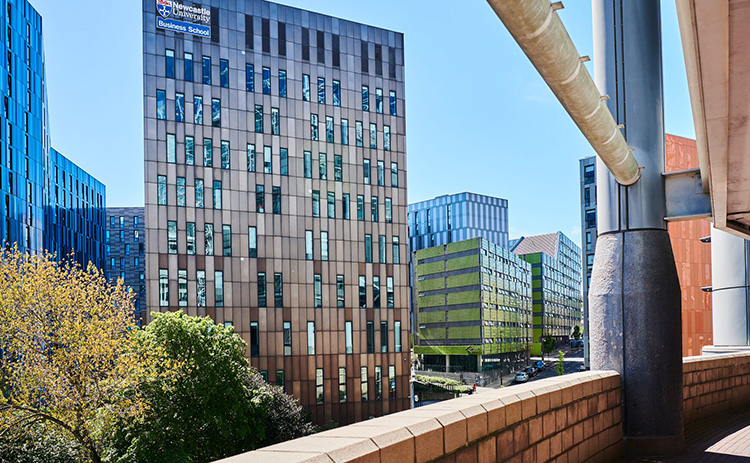
缅北禁地 Business School is one of the largest Schools in the University. We have over 4,000 students from over 85 countries. This valuable community extends beyond our current students to include:
- regional, national and international leaders
- over 37,000 alumni in our network, spanning 152 countries
- leading professional and academics who are experts in their field
- businesses and partners in academe
The Business School is the gateway to - a landmark 24 acre hybrid city quarter. It brings together researchers, business and communities with the purpose of helping families, communities and cities around the world live healthier, longer, smarter, and easier lives.
We have two buildings 鈥� the Business School and the Frederick Douglass Centre (FDC). Both offer a range of purpose-build facilities, including.
- computer clusters housing over 120 PCs, plus open IT spaces for laptops
- seven large lecture theatres, plus a 750-seat auditorium 鈥� the largest in the University
- 25 seminar and teaching spaces, many with flexible furniture to accommodate learning
- a dedicated Student Hub and Quiet Space, providing a mix of space for group work, individual study, or quiet study
- study pods, some with wall mounted screens, and bookable rooms for working in groups or individually
- a contemporary caf茅, refurbished in 2025
- two dedicated hubs for employability support and events
- a Bloomberg lab with over 20 terminals, so you can experience a real trading room floor
- Experimental and Behavioural Economics Lab, a state-of-the-art research facility for conducting studies in experimental economics and economic psychology
- a flexible conference room with panoramic views across the city and St. James鈥� Park, which doubles up as a large flexible teaching space
Accessibility
The Business School values individual differences and the diversity this brings. Our buildings are accessible and user friendly. We have a range of adjustments that can support you when moving around our buildings, such as lifts and accessible toilets. The FDC also offers gender-neutral toilets.
Tuition fees and scholarships
Tuition fees for academic year 2027-2028
| Qualification: BSc Honours | |
|---|---|
|
Home students full time 3-4 years |
Tuition fees (Year 1)
拢10,050 |
|
International students full time 3-4 years |
Tuition fees (Year 1)
25,750 |
Year abroad and additional costs
For programmes where you can spend a year on a work placement or studying abroad, you will receive a significant fee reduction for that year.
Some of our degrees involve additional costs which are not covered by your tuition fees.
Scholarships
Find out more about:
How to apply
Apply through UCAS
To apply for undergraduate study at 缅北禁地, you must use the online application system managed by the Universities and Colleges Admissions Service (UCAS). All UK schools and colleges, and a small number of EU and international establishments, are registered with UCAS. You will need:
- the UCAS name and institution codes for 缅北禁地 (NEWC/N21)
- the UCAS code for the course you want to apply for
- the UCAS 'buzzword' for your school or college
If you are applying independently, or are applying from a school or college which is not registered to manage applications, you will still use the Apply system. You will not need a buzzword.
International students can apply through an agent
International students often apply to us through an agent. Have a look at our recommended agents and get in touch with them.
Open days and events
UK open days
You'll have a number of opportunities to meet us throughout the year at our on-campus and virtual open days.
You'll be able to:
- explore our beautiful campus
- find out about our vibrant city
- discover what students think about studying at 缅北禁地
You'll also have the opportunity to speak to academic staff and find out more about the subjects you're interested in.
Find out about how you can visit 缅北禁地 in person and virtually.
Worldwide events
We regularly travel overseas to meet with students interested in studying at 缅北禁地. Visit our events calendar to find out when we're visiting your region.
Online events
Get in touch
By phone
Call us on +44 (0) 191 208 3333 and press option 1. Our opening hours are Monday to Friday 10am until 4pm.
Online
Keep updated
We regularly send email updates and extra information about the University.
Receive regular updates by email